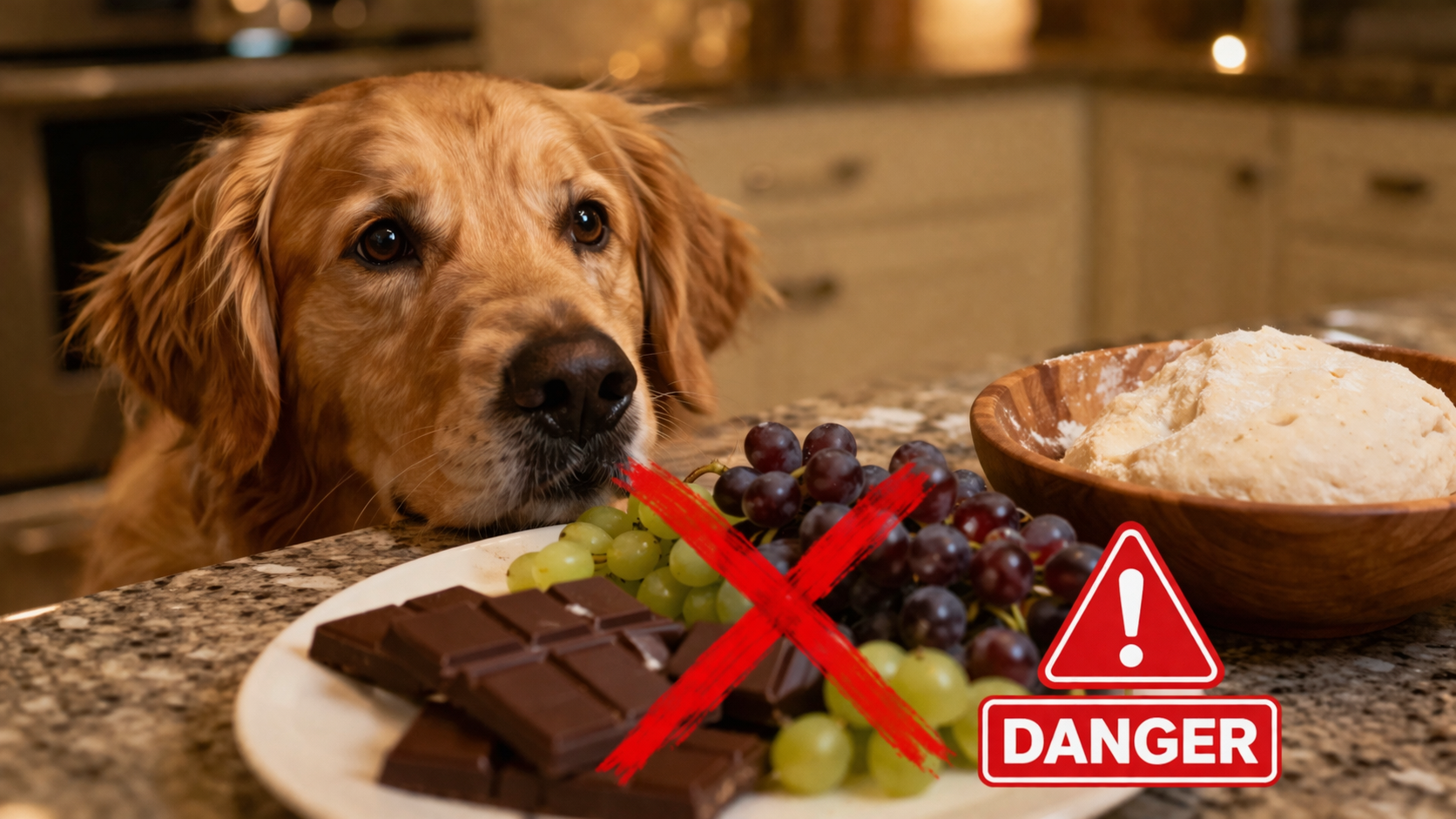
Common Foods That Are Actually Dangerous for Your Dog
I used to think feeding my dog from my plate was harmless—a small bite here, a leftover there. That changed one evening when I gave my dog a few grapes. Within hours, he was restless and clearly uncomfortable. That moment forced me to learn what dogs actually shouldn’t eat.
This isn’t just a list; it’s based on real mistakes, vet visits, and things I now double-check every time I cook or travel with my pet.
Why Human Food Can Be Risky for Dogs
Dogs don’t process food like we do. Their bodies react differently to certain compounds, even in tiny amounts. Some foods affect their nervous system, while others can cause sudden kidney or liver failure. The tricky part? Symptoms often show up hours later, making it hard to connect the cause.
1. Chocolate – A Serious Risk
Everyone knows chocolate is bad, but dark chocolate is the real danger due to high theobromine levels. After a friend left chocolate cookies on a table, my dog became hyperactive and started shaking. Now, I keep all chocolate stored in high cabinets.
2. Grapes and Raisins – The Unexpected Danger
Grapes seem healthy, but for dogs, they can cause sudden kidney failure. I once gave my dog a handful as a snack, not knowing the risk. He lost his appetite and became lethargic fast. Now, I have a zero-tolerance policy for grapes in my house.
3. Onions and Garlic – Hidden in Every Meal
This one is tricky because they are in almost every gravy or seasoned dish. They can damage a dog’s red blood cells, leading to anemia. I’ve stopped giving any cooked leftovers unless I’m 100% sure they are plain.
4. Xylitol – The Hidden Sweetener
Xylitol is a sugar substitute found in sugar-free gum, some peanut butters, and candy. It causes a rapid drop in blood sugar. Always read labels on peanut butter before using it as a treat—if it says “Xylitol,” put it back!
5. Cooked Bones – A Risky Treat
Cooked bones become brittle and splinter. I once gave my dog a chicken bone and saw sharp fragments immediately. It’s a major choking hazard and can cause internal injuries. Stick to vet-approved chew toys instead.
6. Dairy Products
Many dogs are lactose intolerant. After giving my dog milk once, he had an upset stomach all day. If you want to give a treat, keep dairy to a bare minimum or avoid it entirely.
7. Salt and Salty Snacks
Sharing chips during movie night might seem cute, but too much salt leads to dehydration and salt poisoning. I’ve swapped salty snacks for proper dog treats.
8. Caffeine and Raw Dough
Caffeine affects a dog’s heart and nervous system much more than ours. Also, raw dough can expand in their stomach and cause dangerous bloating. Keep your baking supplies and coffee cups out of reach!
My Simple Routine to Stay Safe
After making these mistakes, I created a simple system:
- No table feeding: I don’t feed him while I’m eating.
- Ingredient check: I read labels on everything, especially snacks.
- Emergency Ready: I keep my vet’s number saved as a favorite in my phone.
Pro Tip: Having a solid pet insurance plan is a lifesaver for these accidental poisoning cases. It covers the emergency vet visits and treatments so you can focus on your pet’s recovery.
Final Thoughts
Most accidents happen because we just don’t realize something is dangerous. Your dog trusts you completely with what you put in their bowl. Taking a little extra care with ingredients goes a long way in keeping them healthy and safe for years to come.